How to Navigate a New City Without Mobile Data: A Checklist
Your phone is at nine per cent, the street signs are in an alphabet you can't read, and the map you saved on the train refuses to load. It happens in every city eventually. The reassuring part is that getting around without mobile data is a skill rather than a talent, and it's built from small habits that cost nothing and take about ten minutes. What follows is a working checklist for paper maps, offline tools, landmarks and asking real people for help. Use it before you leave the hotel, not after you've walked twenty minutes in the wrong direction.
Before You Leave in the Morning
Ten minutes over breakfast buys you a calm day. Start by finding your accommodation on the map and marking it with a pencil cross. Write the address down on paper, in the local script if that script isn't yours — a taxi driver in Tokyo or Athens will make far more sense of a written address than of your pronunciation. Note the nearest station and one landmark close to your base: the name of the square, the church, the big bookshop on the corner.
Then sort your offline kit. A short list covers almost every situation:
- A paper map of the city, plus a regional one if you're heading out of town
- The name, address and phone number of where you're staying, written in the local script
- A charged power bank, a cable, and a plug adapter that fits the country
- A small compass, or a phone compass if the battery is holding up
- Small notes and coins for buses, trams and the occasional emergency taxi
- A pen and some space on the back of the map for directions you're given
Download the offline map area for the city while you still have wi-fi, and take screenshots of the two or three routes you'll actually walk on day one. A screenshot works when an app sulks. So does the hotel's business card, which you should pocket on the way out.
Get to Grips with a Paper Map
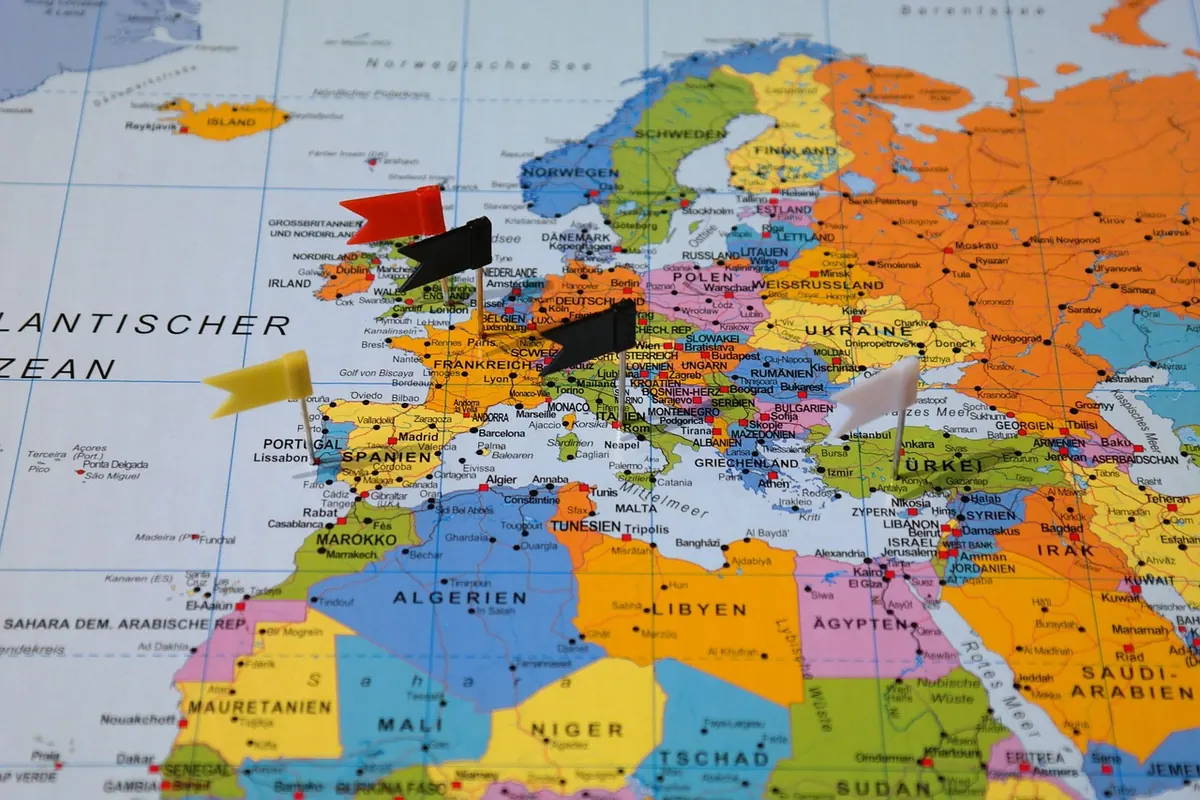
Free maps from hotel lobbies are usually schematic: brilliant for the historic centre, misleading two streets beyond it. If you're staying for more than a couple of days, buy a proper city map from a bookshop or kiosk. Check the scale, then find something you recognise — a river, a station, a cathedral — and work outwards from there.
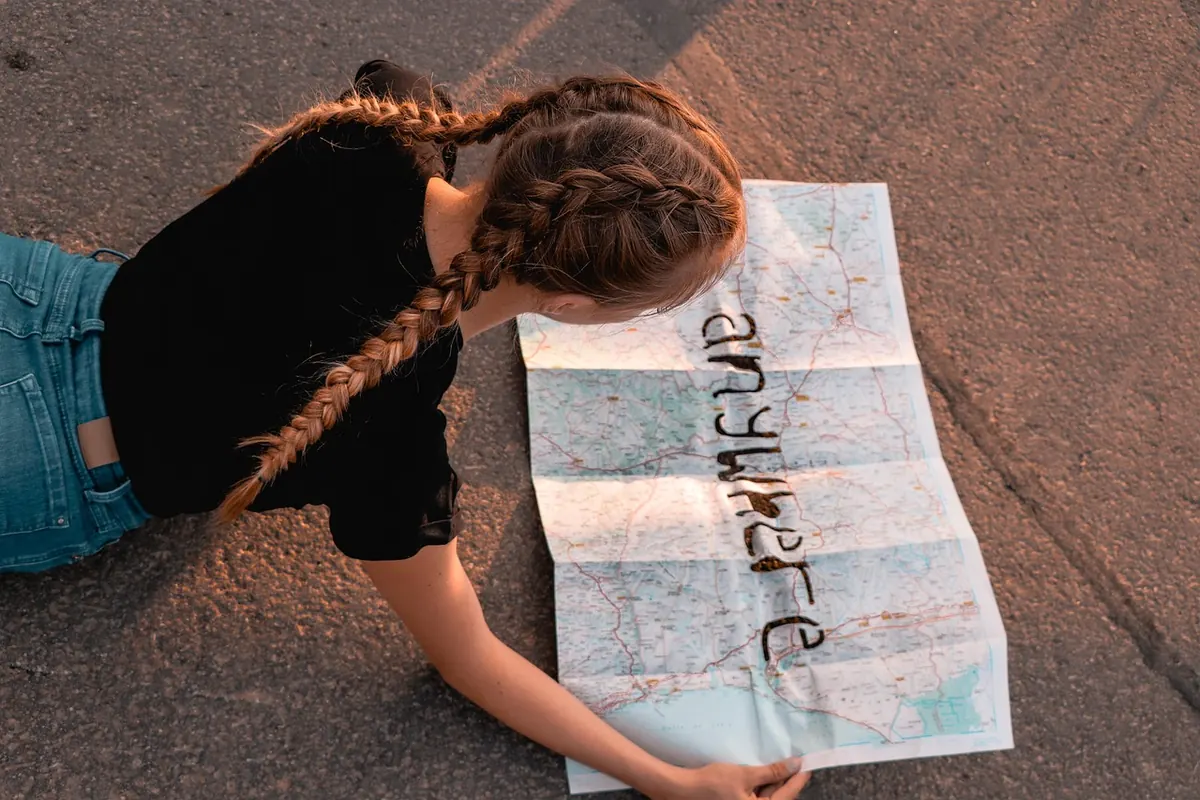
Then turn the map. Most are printed north-up, but the city has no interest in that. Rotate the paper until the street on it lines up with the street under your feet, and suddenly the tangle of lines becomes a picture of the place you're standing in. Refold it so the relevant quarter is showing, and resist the urge to keep checking; look, memorise two turns, walk, look again.
Small things worth noticing
One-way streets, canals, railway lines and ring roads all interrupt the tidy grid on paper. A river with three bridges in a kilometre will decide your route for you. Look for the index and grid references if you're searching for a specific museum, and mark anything you'll need later with a pencil rather than trying to remember it.
Offline Tools That Work When the Signal Doesn't
Your phone's GPS chip listens to satellites, not masts, so it keeps working with mobile data switched off. What fails is the map itself, which is why downloading an offline area before you travel matters. Do it at home, over wi-fi, and open the app once in the city so it confirms the download is intact.
Turn data roaming off and leave location on. Aeroplane mode saves battery but switches off some phones' GPS entirely, so check yours before relying on it. Beyond maps, the useful offline extras are a translation pack for the local language, screenshots of any tickets or booking references, and a note of your accommodation's coordinates. Cold weather drains batteries faster, navigation drains them faster still, and a phone that dies at four in the afternoon is no help at all in the evening.
Landmarks, Rivers and Other Anchors
Most cities have a spine: a river, a main square, a ring road, a hill, a coastline, a huge station. Learn the big ones on your first day and you can be confused without being lost. In Venice, the Grand Canal and the Rialto. In Lisbon, the Tagus and the Baixa grid below the castle hill. In Paris, the Seine and its two banks. Once you know which side of the water you're on, every wrong turn is recoverable.
Heights help. Church towers, minarets, domes, a single glass skyscraper and the nearest mountain will all tell you where you are if you can see two of them. You can even triangulate roughly: take a bearing to one landmark, then another, and where the two lines cross is about where you're standing. The sun gives a broad hint too — east in the morning, west in the evening — though it's little use at midday.
How to Ask for Directions Properly
Choose someone who isn't moving with purpose. A shopkeeper between customers, a market trader, a museum attendant, a bus driver at the end of a route and a security guard outside a bank are all good bets. Learn five phrases in the local language before you go: excuse me, please, thank you, left, right, straight on. Add "where is" and you can manage most conversations.
Ask for landmarks rather than street names — "second left after the pharmacy, then straight past the school" sticks far better than a string of unfamiliar words. Repeat the directions back, and write them down as you go. If it's important, ask a second person in a different place; if the two accounts agree, you're almost certainly fine. Hotel reception will often sketch a small map and write the destination in the local script, which is worth more than any app when you need to show a driver.
When You Realise You're Lost
Stop walking. Retracing your steps to the last point you were certain about is faster than pushing on and hoping. Look for a station entrance, a bus stop with a route map, or a hotel lobby — you can walk into most of them, glance at the wall map and ask at the desk. If it's late, or you feel uneasy, head for somewhere busy and well lit and take a taxi the rest of the way rather than wandering. Keep your phone and cash out of sight while you work out what to do.
The Habit That Makes It Second Nature
Before you step out each morning, do three things: look at the map for thirty seconds and name the landmark you're heading for, agree a meeting point with anyone you're travelling with in case you get separated, and check that your map, notes and power bank are in the same pocket every time. Do it even when your data is working perfectly. The days when you know roughly where you are without checking are the days you actually see the city — and a place you've read on paper tends to stay with you far longer than one you followed as a blue dot.
Photo: 11417994 / Pixabay